Making your decision
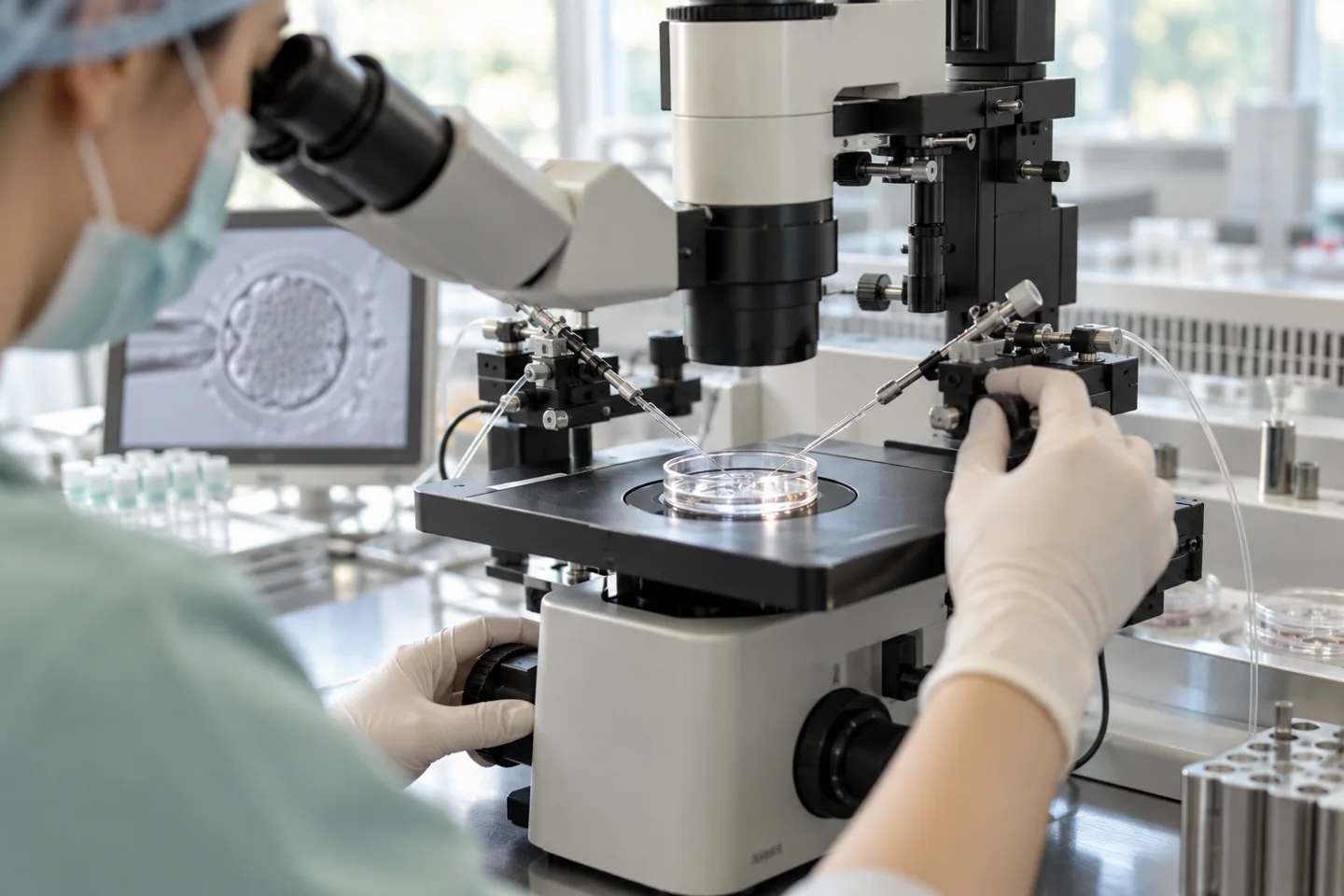
IVF brings eggs and sperm together in a laboratory. The first decision is understanding the reason for difficulty conceiving, rather than selecting a technique in advance.
1. Assessment and planning
Your first visit covers how long you have been trying, menstrual patterns, previous pregnancies, operations and medicines. Bring dated hormone tests, semen analyses and treatment reports. Ultrasound and appropriate investigations help assess the ovaries, uterus and sperm together. An assessment does not mean that every couple needs IVF immediately.
Assess both partners
Fallopian tubes, ovulation, endometriosis, age and ovarian reserve matter alongside sperm count, movement and medical history. For unexplained infertility, previous treatments and the time spent trying also inform decisions. Urology or genetics input may be useful. Treating infertility as exclusively a woman’s problem gives an incomplete picture.
Ask at your consultation
Why is IVF suggested for my findings, and are waiting, medication or insemination reasonable alternatives?
Preparing for your first appointmentSources and further reading
General information does not replace an individual diagnosis or treatment plan. Outcomes vary.