Making your decision
Not every fertilised egg becomes a transferable embryo. Embryo assessment, uterine preparation and safety guide transfer timing. Freezing can provide flexibility, but does not guarantee a future pregnancy.
Why freezing may be considered
Reasons include storing suitable remaining embryos, postponing transfer because of hyperstimulation risk, or awaiting genetic results. Uterine preparation may also require time. Decisions consider embryo development, hormonal response and health. Freezing every embryo in every cycle is not automatically necessary.
What vitrification does
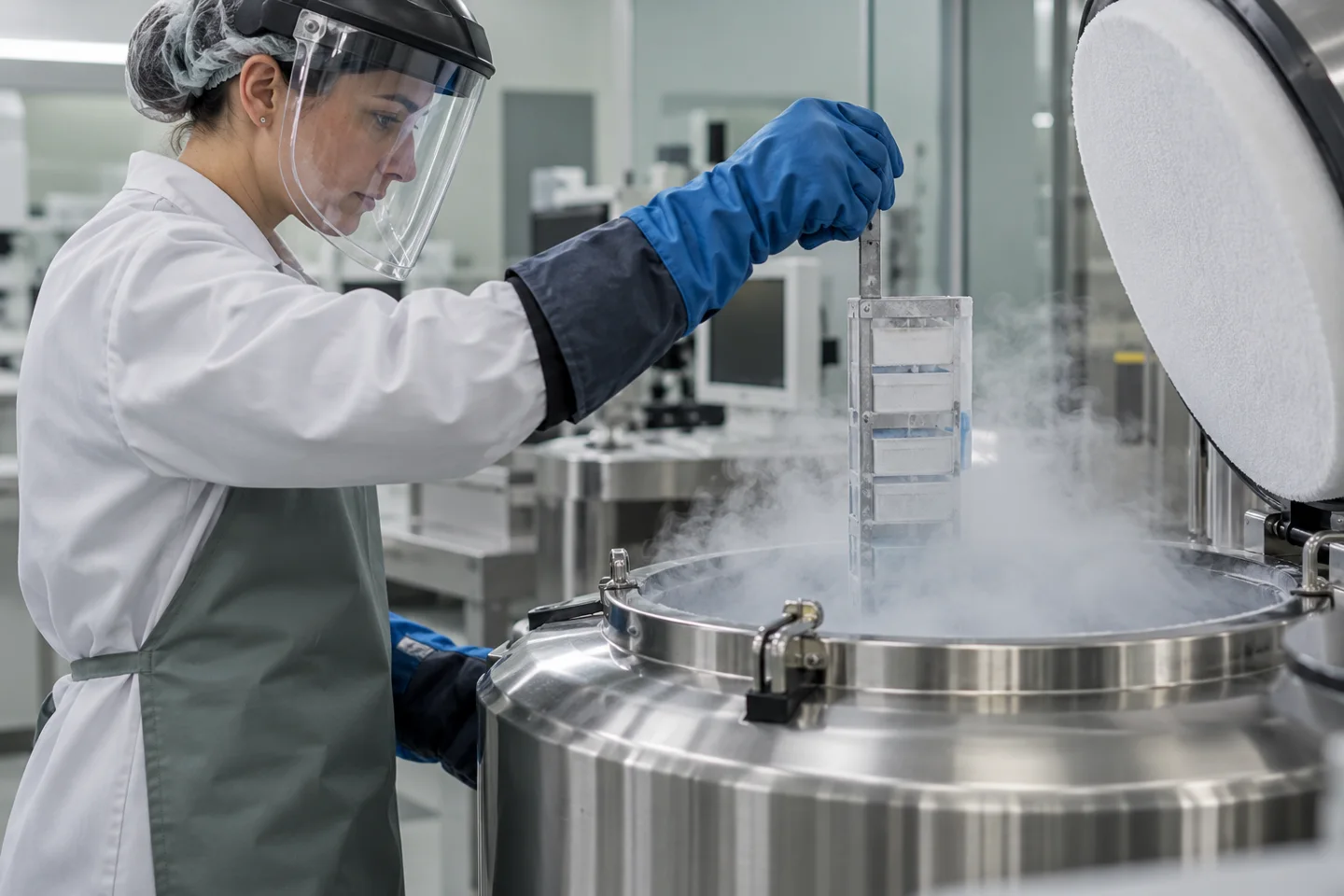
Vitrification is a rapid freezing approach intended to reduce ice crystal formation. Embryos are stored under controlled conditions and assessed again after warming for transfer. Not all embryos survive warming. Ask about the laboratory’s quality system, identification safeguards and traceability as well as its equipment.
Preparing the uterus
A natural-cycle approach or hormone preparation may be considered according to menstrual patterns and clinical needs. Progesterone timing must align with embryo development. Do not use another patient’s medication schedule. Written instructions covering visits, medicine duration and possible date changes can make the process easier to follow.
Ask at your consultation
Why is fresh or frozen transfer proposed for me, and what are the storage conditions?
Preparing for your first appointmentSources and further reading
General information does not replace an individual diagnosis or treatment plan. Outcomes vary.