Making your decision
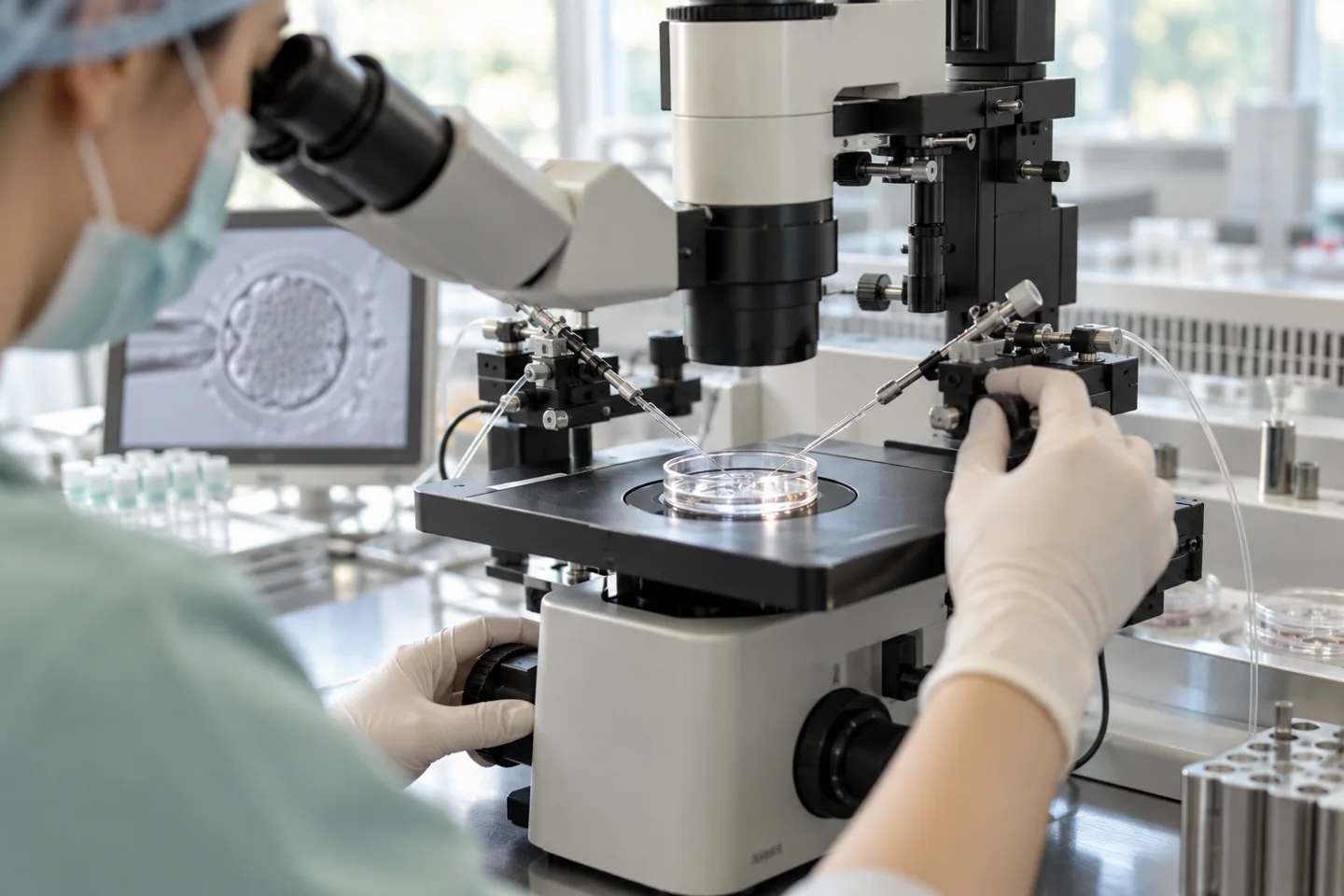
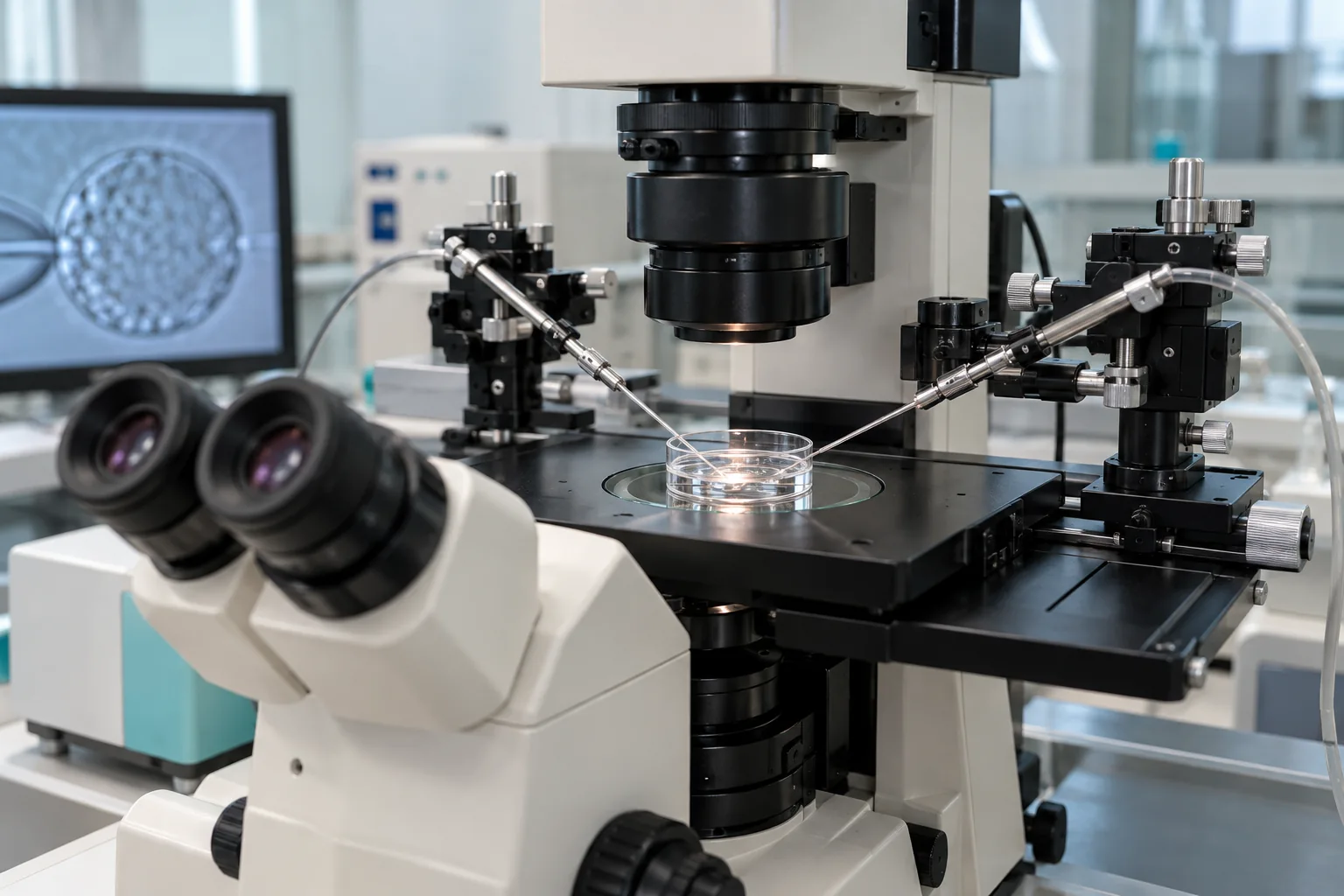
Conventional IVF places eggs and sperm together; ICSI injects one sperm into an egg. Semen findings and previous fertilisation history help guide the choice. ICSI is not an upgrade that improves live birth in every situation.
ICSI and micro-TESE are different
ICSI introduces a selected sperm into an egg; fertilisation and pregnancy remain uncertain. Micro-TESE searches testicular tissue for sperm in selected azoospermia cases. Retrieval is not always successful. Hormones, examination and sometimes genetic investigations inform counselling; no single marker makes the surgical outcome certain.
3. Fertilisation and transfer
The laboratory evaluates the eggs and uses conventional IVF or ICSI when appropriate. Not every egg fertilises and not every embryo reaches transfer. Embryo development, uterine preparation and safety determine whether a fresh or frozen transfer is planned. Embryo number must consider a safe pregnancy and applicable local rules.
Ask at your consultation
What finding supports ICSI in my case, and how is the expected benefit assessed?
Preparing for your first appointmentRelated guides
Assessment for couples with an azoospermia diagnosis Micro-TESESources and further reading
General information does not replace an individual diagnosis or treatment plan. Outcomes vary.