Making your decision
The pathway includes assessment, stimulation, egg collection, fertilisation, embryo development and the transfer decision. Findings at each stage guide the next step. Delayed transfer or replanning a cycle does not necessarily indicate an error.
1. Assessment and planning
Your first visit covers how long you have been trying, menstrual patterns, previous pregnancies, operations and medicines. Bring dated hormone tests, semen analyses and treatment reports. Ultrasound and appropriate investigations help assess the ovaries, uterus and sperm together. An assessment does not mean that every couple needs IVF immediately.
2. Stimulation and egg collection
Hormone treatment aims to develop several follicles. Ultrasound and, when needed, blood tests guide monitoring and dose adjustments. The timing of the final maturation injection matters. Follow your clinic’s preparation and anaesthesia instructions for egg collection; another patient’s medication calendar is not a safe substitute for your own.
3. Fertilisation and transfer
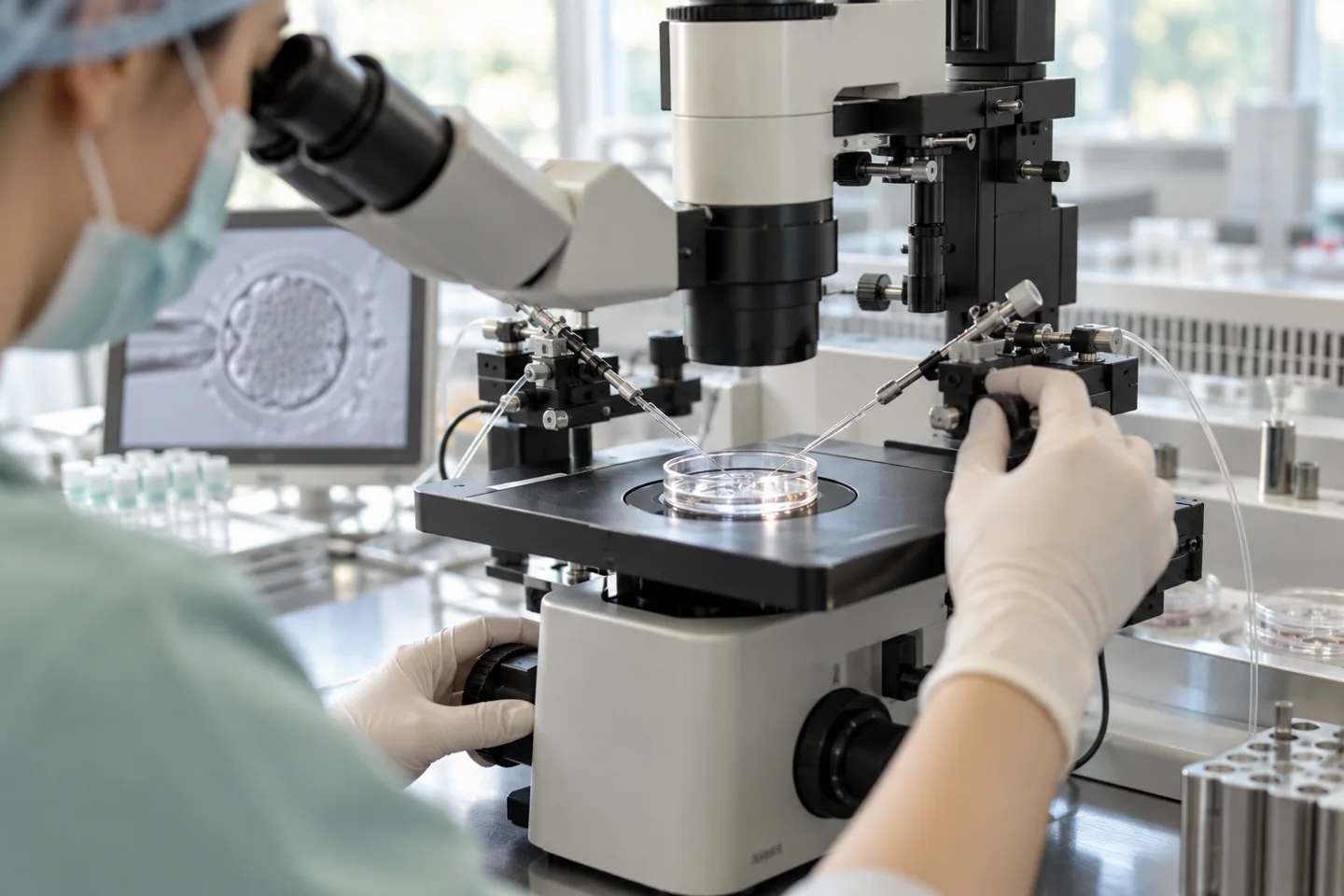
The laboratory evaluates the eggs and uses conventional IVF or ICSI when appropriate. Not every egg fertilises and not every embryo reaches transfer. Embryo development, uterine preparation and safety determine whether a fresh or frozen transfer is planned. Embryo number must consider a safe pregnancy and applicable local rules.
Ask at your consultation
Which findings could change the plan, and who will explain the change?
Preparing for your first appointmentSources and further reading
General information does not replace an individual diagnosis or treatment plan. Outcomes vary.